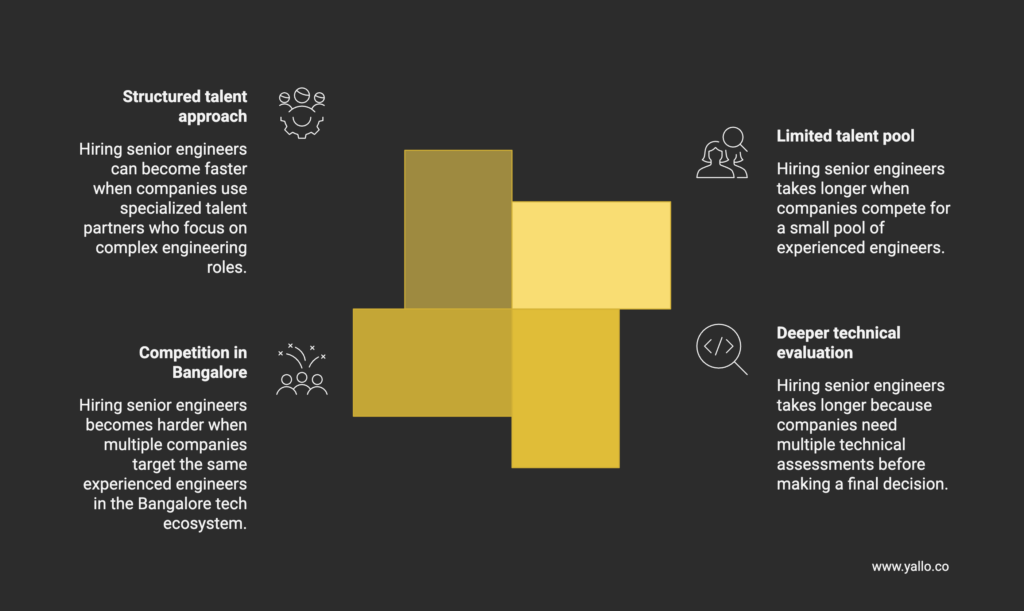
Hiring senior engineers is very different from hiring mid level developers because the number of qualified candidates is significantly smaller. Senior engineers usually reach that level after many years of experience working on complex systems, large scale architectures, and cross team technical decisions. Companies that are hiring senior engineers are not only evaluating coding ability but also looking for engineers who can guide teams, design systems, and make long term technical decisions. Because these expectations are high, the pool of candidates who truly fit senior engineering roles becomes much smaller.
In technology hubs like Bangalore the situation becomes even more competitive. Many large companies are hiring senior engineers at the same time and they are often targeting the same group of experienced engineers. Product companies, global tech organizations, and fast growing startups are all competing for talent that already has strong experience in distributed systems, backend platforms, or large scale infrastructure. When several companies are hiring senior engineers from the same limited talent pool, the hiring process naturally slows down.
Another reason hiring senior engineers takes longer is that companies become more selective during the hiring process. Engineering leaders want candidates who can influence architecture decisions, mentor developers, and contribute to long term product stability. Because of this, many candidates drop out during interviews or receive multiple competing offers. This combination of limited supply and high expectations is one of the main reasons hiring senior engineers often takes several weeks and sometimes stretches to two or three months.